


.png)


Try Default

See how revenue teams automate revenue operations with Default.

Key Takeaways
- Qualified uses custom enterprise pricing with no public tiers. Contracts typically scale based on website traffic, seat count, Salesforce complexity, and premium add-ons (often reaching high five to six figures annually).
- Core value centers on Salesforce-native conversational routing and pipeline attribution, but advanced AI, reporting, and support increase total cost.
- Hidden costs often emerge through implementation services, traffic threshold upgrades, and seat expansion.
- Teams needing predictable pricing and full lifecycle automation often evaluate workflow-first alternatives like Default.
Researching Qualified pricing in 2026 usually means one thing: you’re trying to understand whether the contract cost aligns with your pipeline impact.
Qualified operates on custom enterprise pricing. Costs scale based on traffic, routing complexity, Salesforce depth, and add-ons.
In this guide, you’ll learn:
- What Qualified typically costs in practice
- Which features increase contract value
- Where hidden fees appear
- How it compares to workflow automation platforms like Default
Let’s break down the numbers and trade-offs.
How much does Qualified cost?
Qualified’s Agentic Marketing Platform uses custom enterprise pricing across three tiers. No public rates are listed; all plans require a sales quote.
Default: an alternative
If you’re evaluating Qualified, you’re likely focused on improving website-to-meeting conversion inside Salesforce. But conversational routing is only one layer of revenue execution. After capture, teams still face enrichment gaps, routing errors, duplicate records, SLA drift, and inconsistent lifecycle progression.
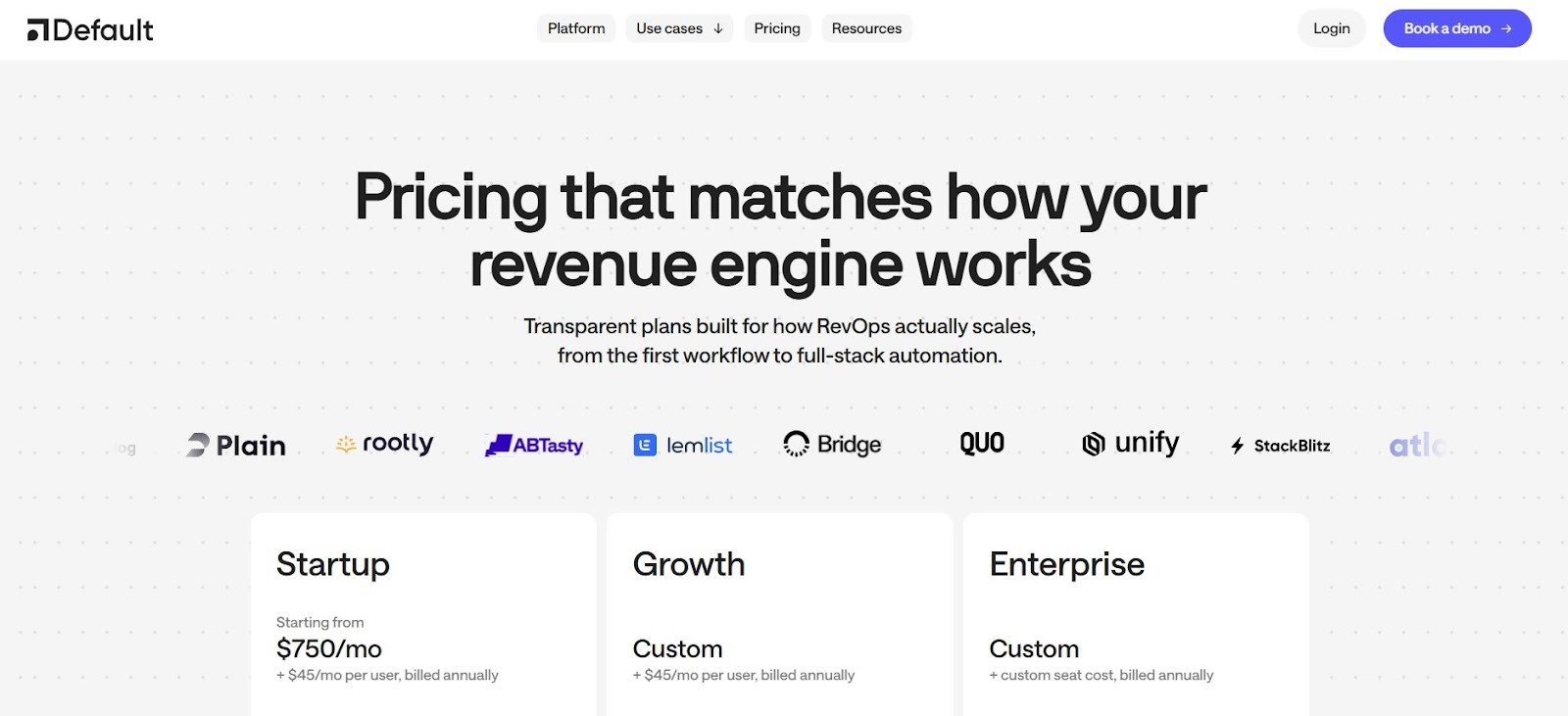
Default is a CRM hygiene and RevOps automation platform built to automate what happens after the form fill.
Why revenue teams consider Default:
- Waterfall enrichment with built-in access to vendors, no integrations required
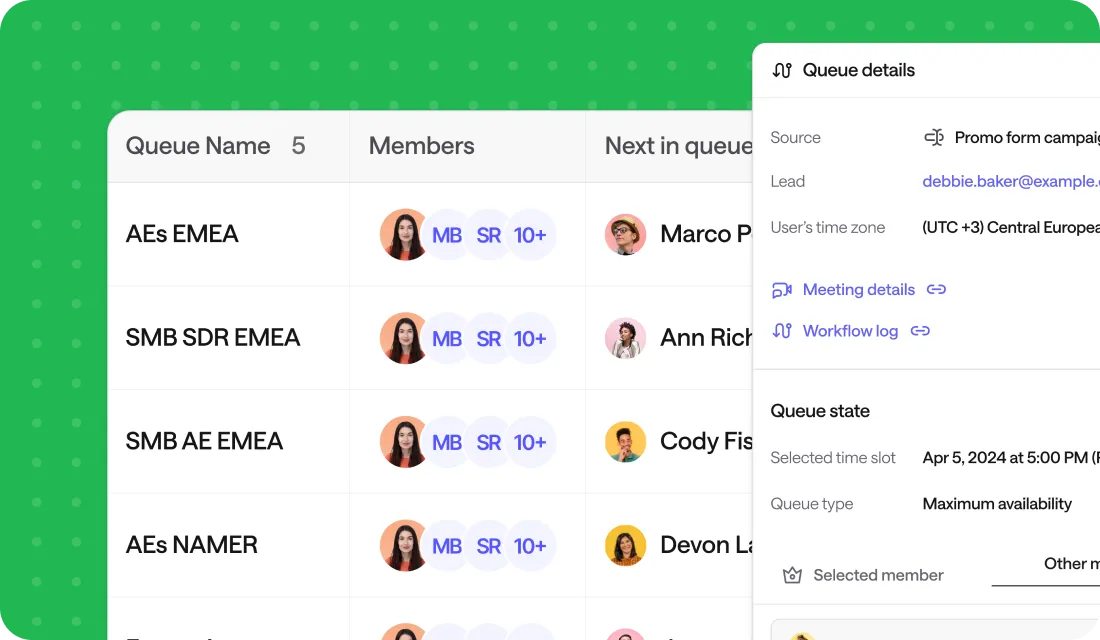
- Automated lead routing across territory, ownership, and capacity
- Continuous deduplication and CRM cleanup
- Scheduled workflows for routing, enrichment, and intent monitoring
- AI-powered account research to close intelligence gaps
Pricing comparison:
Qualified focuses on conversational conversion. Default governs the entire lead workflow.
Qualified pricing plans: a breakdown
Qualified’s pricing expands primarily based on feature depth, routing complexity, and enterprise AI and reporting packages.
Below are the core capabilities that tend to drive contract value upward and where costs often increase as teams scale.
Salesforce-native conversational routing
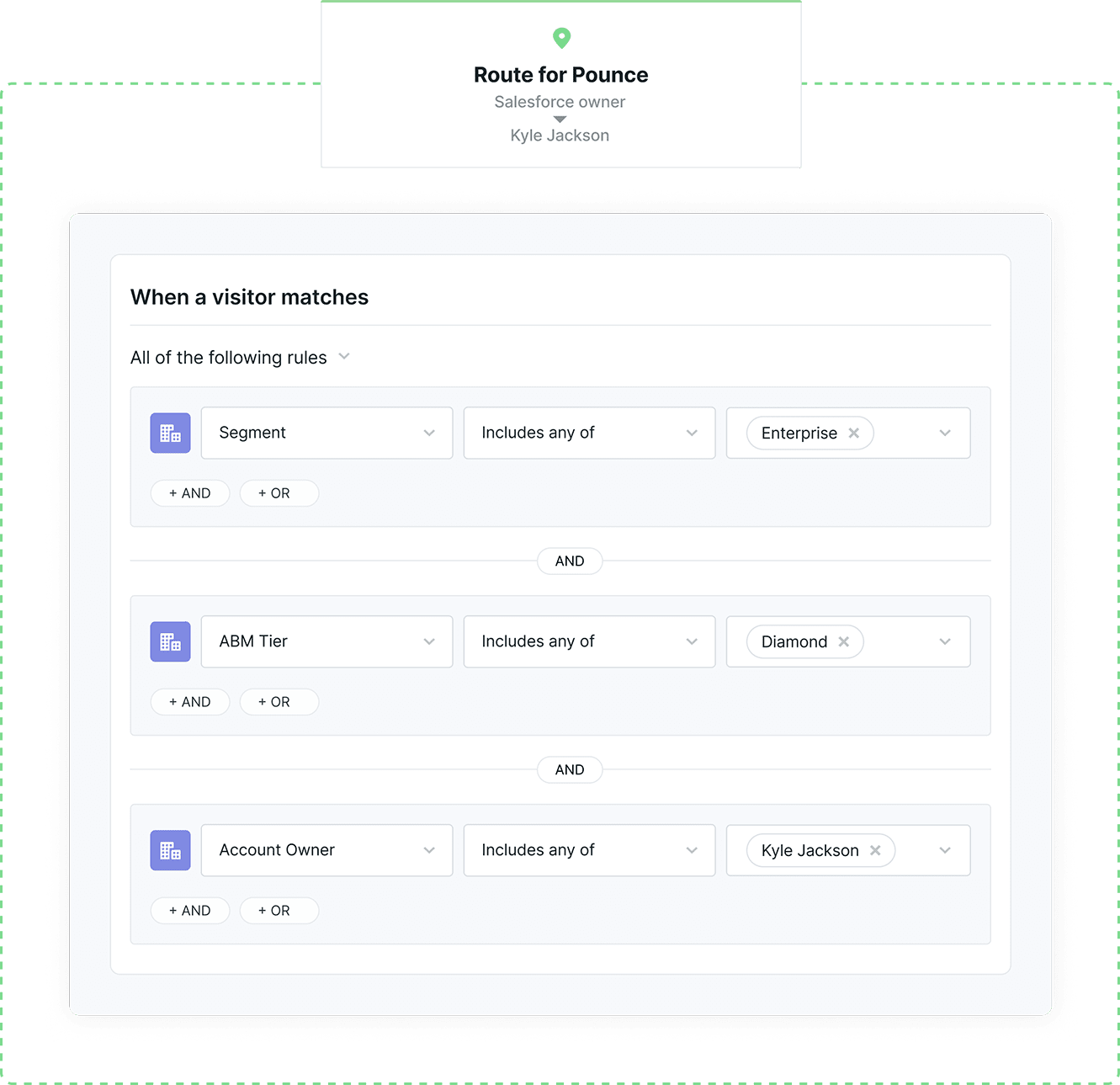
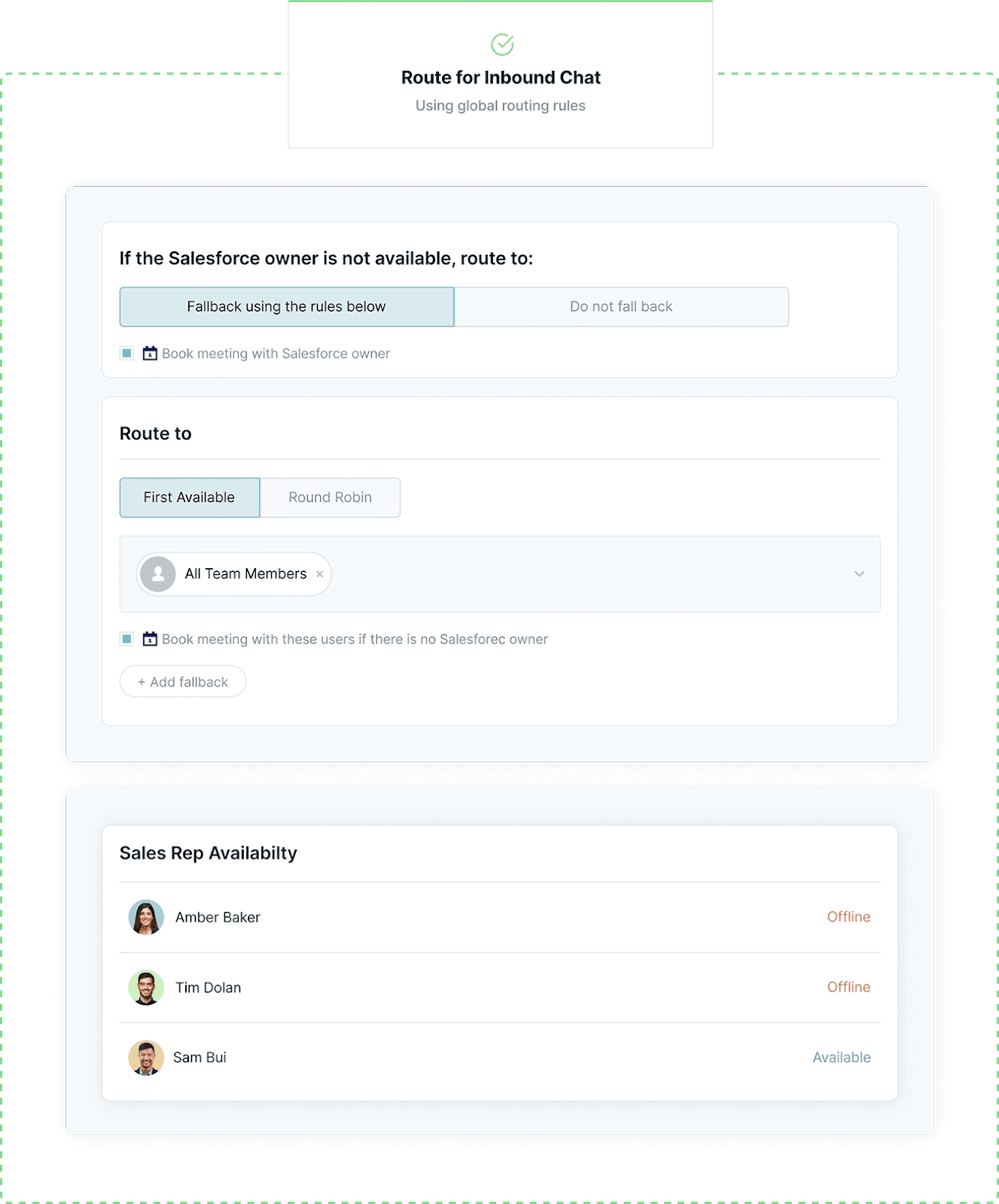
Qualified’s core differentiator is real-time website conversations embedded directly into Salesforce. Contract value typically increases as inbound traffic grows, seat count expands, and routing logic becomes more complex.
AI-powered visitor identification and intent
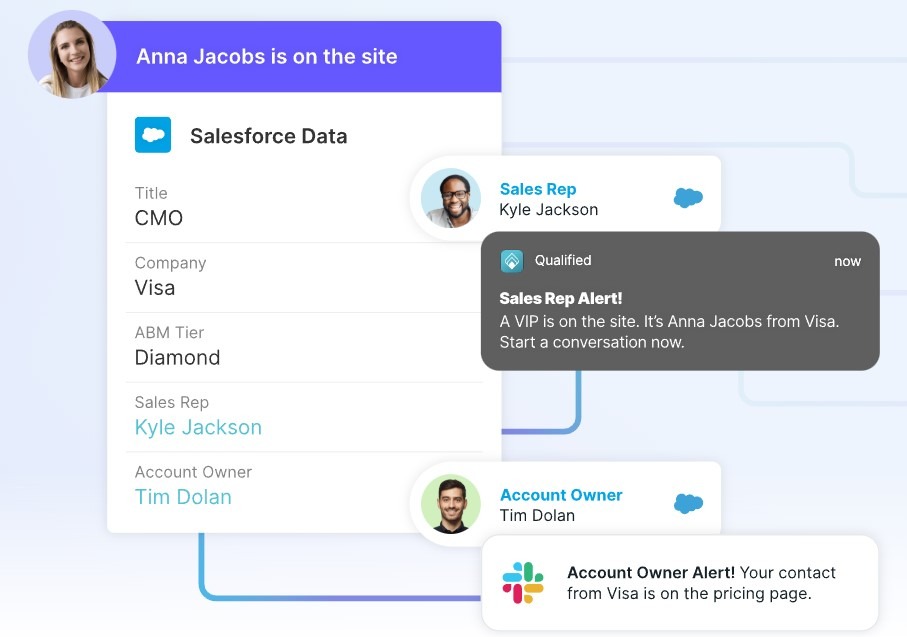
Qualified offers AI-driven visitor identification and conversation prioritization. Deeper account-based insights, third-party intent signals, and advanced AI capabilities are typically available in higher-tier plans.
Pipeline attribution and reporting
Qualified integrates with Salesforce to track influenced pipeline and revenue from website conversations. Standard reporting is generally included, while advanced attribution flexibility and API-level reporting access are tied to higher tiers.
Qualified hidden costs
Qualified’s license fee is only part of total cost of ownership. For RevOps teams, contract value often expands as usage and organizational complexity grow.
Common cost drivers include:
- Implementation and onboarding: Salesforce configuration, routing logic setup, and territory modeling can require internal bandwidth or paid services.
- Seat expansion: Growing SDR and AE teams increase per-seat licensing costs.
- Traffic threshold upgrades: Higher website volume can trigger tier changes.
- Advanced AI and intent features: Often packaged in higher plans.
- Enterprise support tiers: Enhanced SLAs and priority support increase annual spend.
For high-growth teams, costs can scale year over year without careful forecasting.
Qualified pros & cons
Before committing to an enterprise conversational marketing platform, revenue leaders should weigh the operational upside against long-term cost and scalability trade-offs.
Pros
- Deep Salesforce-native integration: Strong fit for teams running routing, attribution, and pipeline governance directly inside Salesforce.
- Website-to-meeting conversion focus: Built to reduce speed-to-lead friction and convert high-intent visitors into booked conversations.
- Enterprise-grade routing support: Handles complex territory assignment, multi-team coverage, and structured SDR handoffs.
- Conversation-level revenue attribution: Useful for tying inbound engagement to influenced pipeline and reporting outcomes.
Cons
- Opaque enterprise pricing: Lack of public tiers makes budgeting, procurement planning, and cost forecasting more difficult.
- Costs scale with traffic and headcount: High-growth inbound motions may trigger contract expansion through seat and traffic threshold increases.
- Primarily website-conversational in scope: Limited workflow coverage beyond chat-driven engagement and inbound conversion.
- Advanced capabilities gated behind premium tiers: AI intent models, deeper reporting, and enterprise support often require add-ons or higher packages.
Who is Qualified best for?
Qualified is not a broad SMB conversational tool. It’s designed for revenue organizations operating inside complex, Salesforce-driven GTM environments with meaningful inbound volume.
Enterprise RevOps leader managing complex routing
You oversee multi-region SDR teams, strict SLA enforcement, and territory-based assignment rules inside Salesforce. Real-time website engagement is a critical conversion lever (and you have the operational maturity and budget to support enterprise deployment).
Demand gen leader with high-intent inbound traffic
You run acquisition and content programs generating significant website volume. Improving visitor-to-meeting conversion and attributing influenced pipeline inside Salesforce is a priority, especially when inbound speed-to-lead impacts revenue outcomes.
Salesforce-first GTM organization optimizing conversational conversion
Your routing, reporting, and pipeline governance are deeply embedded in Salesforce. You prioritize native execution and conversational handoffs over broader cross-channel workflow orchestration.
Qualified customer reviews
Customer feedback on Qualified tends to be strongest among enterprise teams already operating deeply inside Salesforce, where conversational routing and attribution are high-priority workflows.
Positives
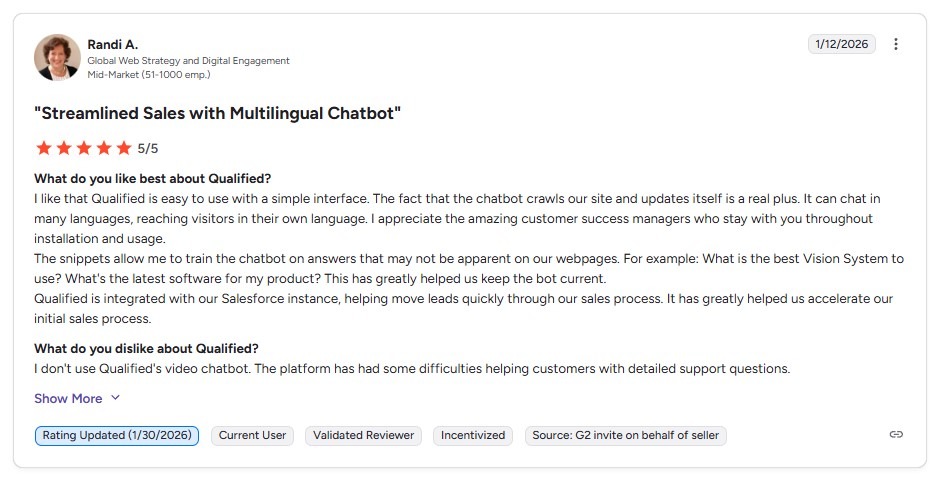
A validated G2 reviewer praises Qualified’s intuitive interface, multilingual chatbot, and strong Salesforce integration. They highlight self-updating site crawling, customizable snippets for training, and responsive customer success support, noting that the platform helped accelerate their sales process.
Complaints
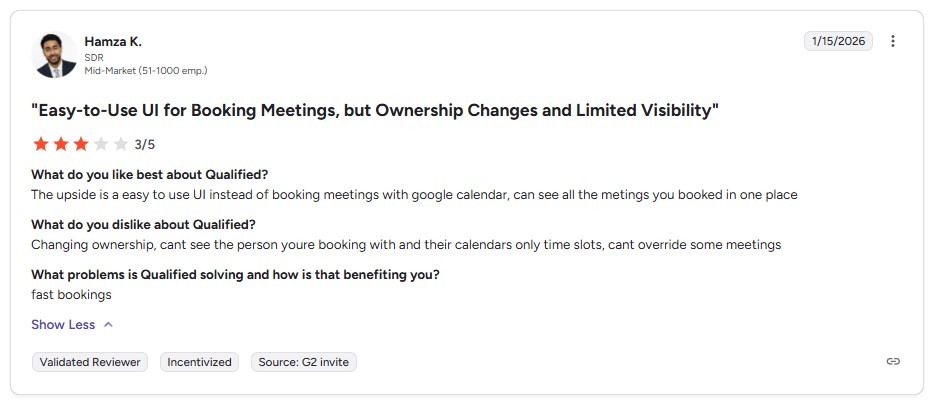
Another validated G2 reviewer notes limitations around ownership changes and meeting visibility. They mention difficulty seeing the specific rep being booked, limited calendar transparency beyond available time slots, and restricted ability to override or adjust scheduled meetings.
Alternative to Qualified: Default
Qualified focuses on Salesforce-native website conversations and real-time meeting conversion. Default addresses what happens after capture: the routing accuracy, enrichment depth, data hygiene, and lifecycle automation that determine whether pipeline actually converts.
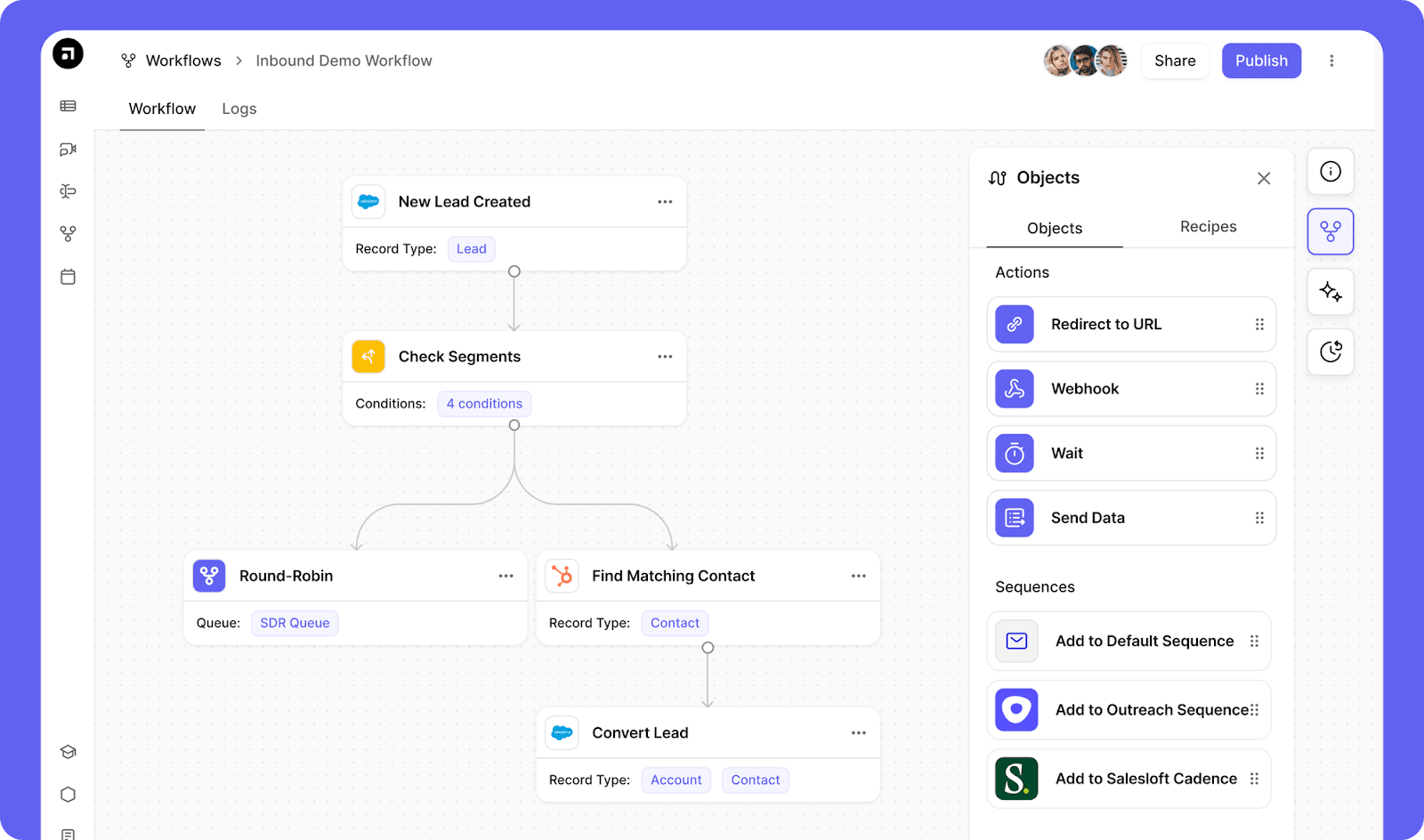
Advanced multi-criteria lead routing
Default routes leads using the logic revenue teams operate on: territory, account ownership, segment, deal size, rep capacity, and SLA thresholds. It supports real-time enrichment before assignment, automated reassignment, and continuous routing governance — reducing lead leakage and manual fixes.
Website visitor identification and intent routing
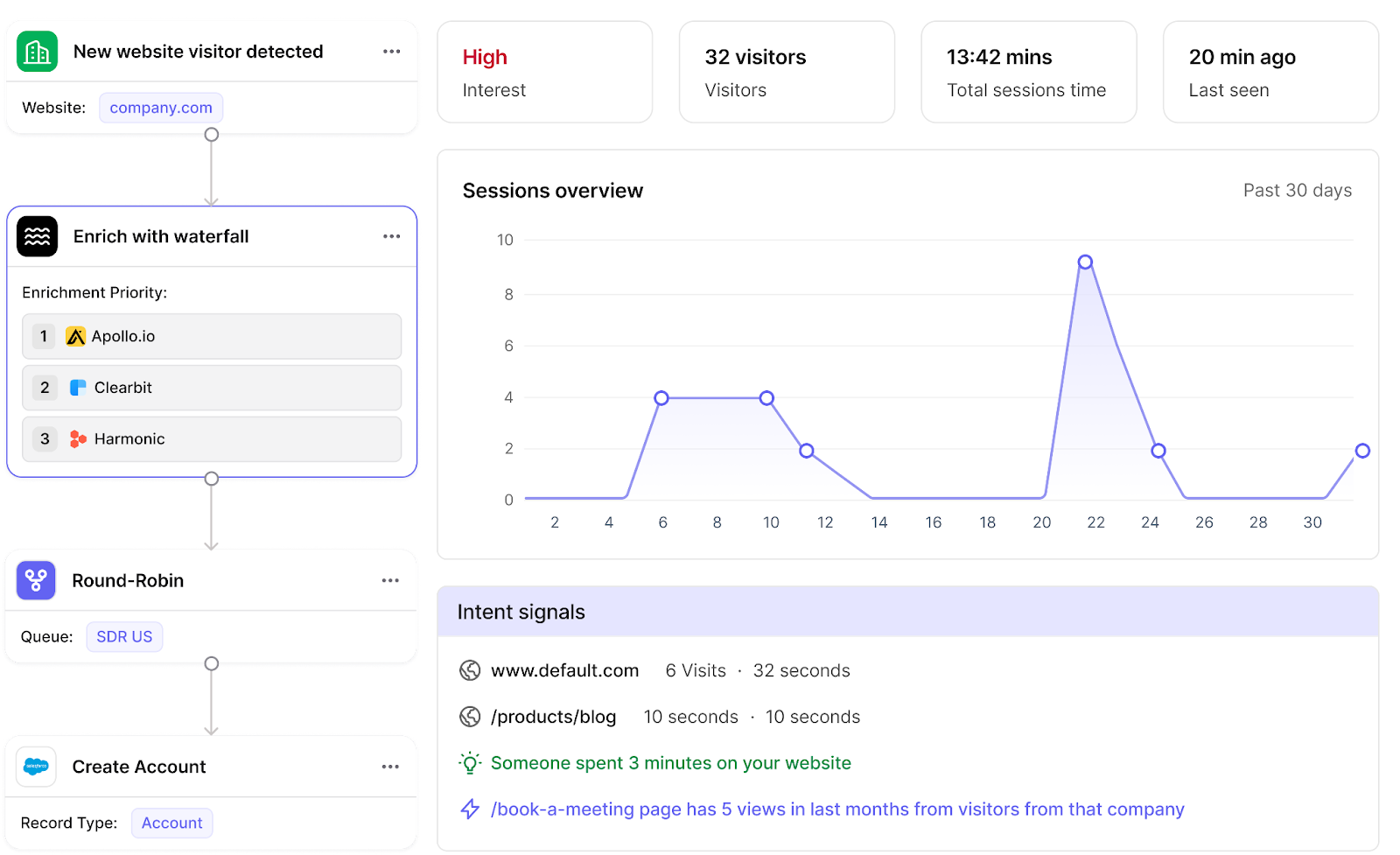
Default can identify companies visiting your website in real time and automatically trigger downstream actions. When target accounts or high-fit companies browse key pages, revenue teams can route the signal to the right owner, alert reps, enrich the account, or launch outbound workflows.
Instead of waiting for a form fill, teams can convert anonymous website intent into pipeline by automating outreach, scheduling, or routing actions based on visitor behavior.
Automated CRM hygiene and lifecycle workflows
Default continuously enriches, deduplicates, and updates records while automating scoring, lead assignment, and SLA enforcement. Instead of optimizing only chat engagement, teams gain structured control across inbound and outbound motions.
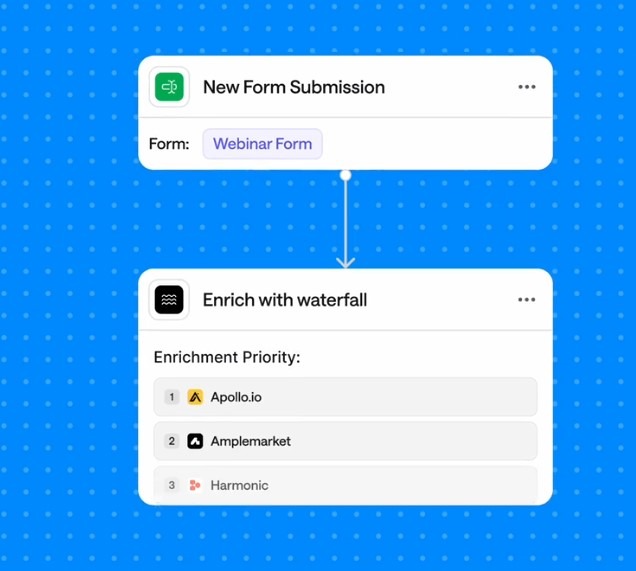
See how Default can streamline your lead workflows
If you’re under pressure to increase pipeline velocity without unpredictable cost growth, optimizing website conversations alone won’t fix routing errors, enrichment gaps, or CRM decay. Default automates enrichment, routing, deduplication, and SLA governance across the lead lifecycle.
Book a demo to see how structured RevOps automation reduces leakage, improves routing accuracy, and keeps execution predictable as you scale.
Conclusion
Former pro Olympic athlete turned growth marketer. Previously worked at Chili Piper and co-founded my own company before joining Default two years ago.
Run revenue as an engineered system
Revamp inbound with easier routing, actionable intent, and faster scheduling